

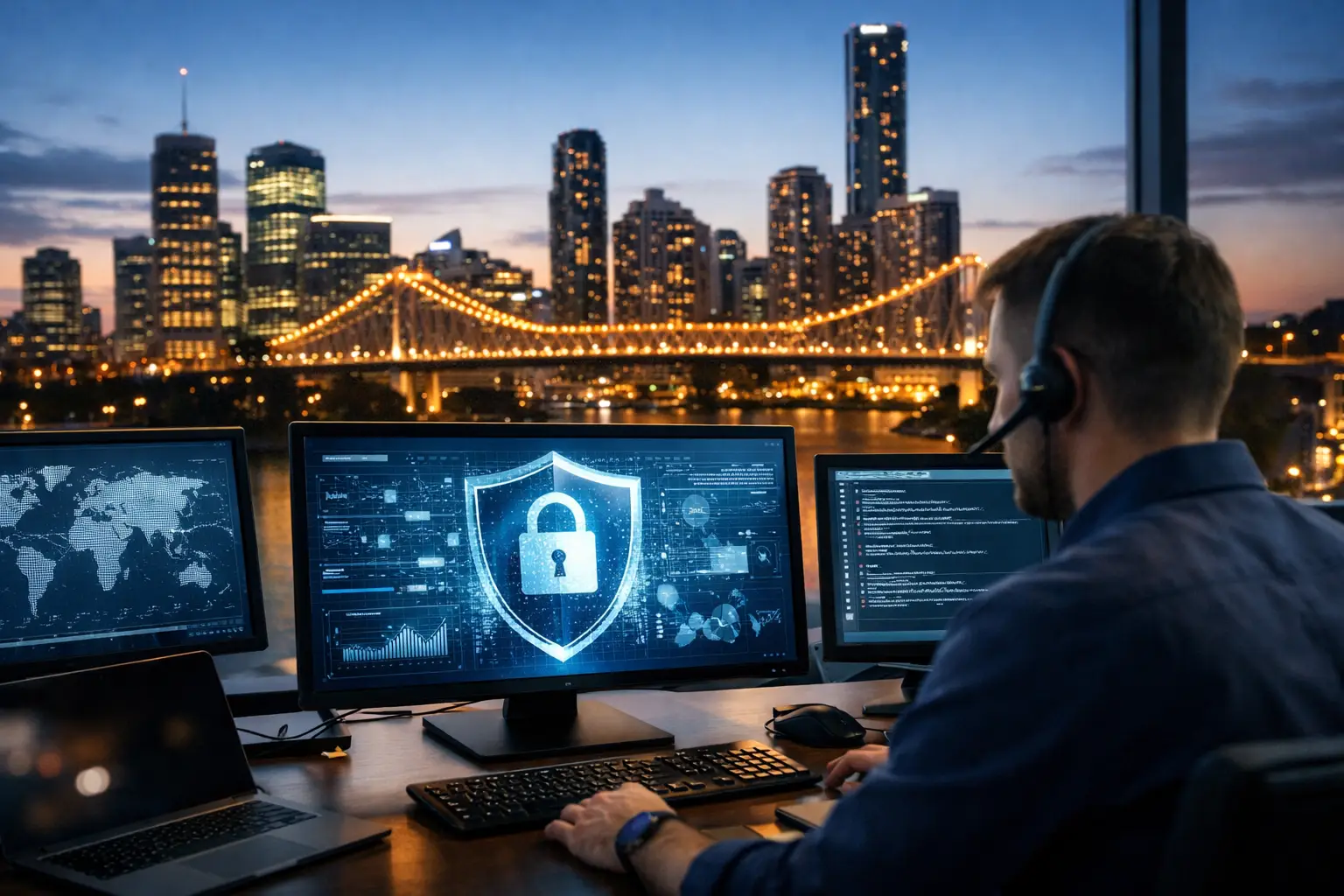
A single phishing email can halt invoicing, lock staff out of Microsoft 365, and turn an ordinary Wednesday into a very expensive problem. That is why managed cyber security Brisbane businesses can rely on has become less of an IT extra and more of an operational safeguard.
For small and mid-sized organisations, cyber security is rarely just about stopping hackers. It is about keeping the phones answered, jobs moving, records accessible, and clients confident that their information is being handled properly. When systems go down, the cost is not only technical. It hits revenue, staff time, reputation, and customer trust.
What managed cyber security Brisbane actually means
Managed cyber security is ongoing protection delivered as a service, rather than a once-off fix or a software subscription left for your team to manage alone. It usually brings together monitoring, threat detection, patching, endpoint protection, email security, access controls, backups, user guidance, and incident response under one support model.
That matters because most businesses do not have an internal security team watching logs, reviewing alerts, or checking whether every laptop and server is configured correctly. In many Brisbane businesses, cyber risk sits awkwardly between the office manager, the practice manager, the business owner, and whichever external provider was last called when something broke. That setup can work until a security issue exposes the gaps.
A managed service changes the model. Instead of waiting for a problem, your systems are reviewed, maintained, and monitored as part of normal operations. The goal is not perfection. The goal is reducing risk, improving visibility, and responding quickly when something suspicious happens.
Why local businesses are rethinking cyber security
The old approach was simple enough. Install antivirus, set a password policy, maybe run backups, and hope that covered the major risks. That is no longer realistic for businesses using cloud platforms, remote work, shared files, mobile devices, and third-party apps.
Attackers are not only targeting large enterprises. Smaller organisations are often easier to compromise because they have fewer controls, older devices, and less internal oversight. A law firm, dental clinic, construction business, accountant, or transport operator may not think of itself as a cyber target, but it still holds valuable information, relies on email, and needs systems available every day.
The pressure is also broader than security alone. Businesses are trying to support staff across multiple devices, modernise ageing hardware, manage Microsoft 365 properly, and keep software current without disrupting work. Cyber security sits inside all of that. It is tied to patching, hardware lifecycle planning, account permissions, cloud setup, and day-to-day support.
The real value is in the combination of services
Good cyber protection is rarely one product. It is the combination of technical controls and consistent management that makes the difference.
Email filtering helps reduce phishing, but it is stronger when paired with multi-factor authentication and user education. Endpoint protection is useful, but it works better when devices are patched, monitored, and replaced before they become a liability. Backups matter, but only if they are checked, protected, and practical to restore under pressure.
This is where many businesses run into trouble. They buy tools from different vendors, but no one owns the whole picture. One provider handles internet, another sells antivirus, someone else built the website, and an internal staff member looks after laptops when time permits. That fragmentation creates blind spots.
A managed approach gives businesses one place to look for accountability. It also tends to produce better decisions because security is considered alongside support, infrastructure, procurement, and business continuity rather than in isolation.
What to expect from a practical managed cyber security service
A worthwhile service should begin with understanding how your business actually operates. A medical practice, real estate office, manufacturer, or home-based professional service will each have different risks, workflows, and tolerance for downtime.
From there, the focus should be on the basics done properly. That usually includes securing business email, protecting endpoints such as desktops and laptops, applying patches, strengthening passwords and access policies, monitoring for unusual activity, and making sure backups are fit for purpose. If your team works remotely or across multiple sites, device management and secure access become even more important.
Response capability also matters. Cyber security is not only prevention. If an account is compromised or ransomware is suspected, businesses need clear action quickly. That may include isolating devices, resetting credentials, checking the extent of the issue, restoring data, and communicating with staff in plain language. A service that looks strong in a brochure but goes quiet during an incident is not much use.
Managed cyber security Brisbane and the hardware question
One area that is often overlooked is hardware age. Businesses can invest in software protection and still be exposed if they are running outdated laptops, unsupported servers, or inconsistent desktop fleets.
Older devices may miss security features, struggle with current operating systems, or remain in service long after they should have been replaced. That creates headaches for both security and productivity. Staff lose time to slow machines, patching becomes unreliable, and support costs creep up.
This is why cyber security planning often overlaps with hardware refreshes. Replacing ageing business devices with properly configured systems can improve performance and reduce security risk at the same time. For organisations buying in volume, that process is easier when one provider can help with procurement, configure-to-order hardware, rollout, and ongoing support rather than leaving the business to coordinate multiple suppliers.
Not every business needs the same level of control
There is no single package that suits everyone. A five-person business may need strong email security, endpoint protection, backup oversight, and sensible access controls without the complexity of enterprise-grade tooling. A growing company with multiple sites, compliance requirements, or a larger mobile workforce may need more advanced monitoring, tighter policy management, and more formal reporting.
That is where a sensible provider adds value. They should not oversell complexity for the sake of it, and they should not underquote by ignoring obvious risks. The right fit depends on your systems, your staff habits, the sensitivity of your data, and how much downtime your operation can tolerate.
It also depends on your internal capability. Some businesses have an experienced operations manager or in-house IT contact who can work alongside an external partner. Others want a fully managed relationship because they simply need technology to work without becoming another job on someone’s desk.
Cyber security works best when it supports the whole business
Security decisions affect more than compliance or risk registers. They influence how easily staff can work, how quickly issues are resolved, and whether technology helps or hinders growth.
For example, tighter login controls may reduce account compromise, but if they are rolled out badly they can frustrate staff and increase support requests. A proper managed service balances protection with usability. The same goes for device standards, cloud access, and software updates. The aim is to make secure ways of working the normal way of working.
That broader view is especially useful for businesses that want one technology partner across support, security, cloud services, websites, procurement, and infrastructure. It removes the back-and-forth that happens when providers blame each other and gives decision-makers clearer advice tied to business outcomes.
For Brisbane organisations that value local support and practical accountability, that can make a real difference. When problems affect payroll, bookings, client records, or field operations, fast help from a team that understands your environment is worth more than a generic service desk reading from a script.
Choosing a provider without getting lost in jargon
The cyber security market is full of technical language, badges, and product names. Most business owners and managers do not need more jargon. They need to know whether a provider can reduce risk, respond quickly, and support the business over time.
A good conversation should cover what is being protected, how issues are identified, what happens during an incident, how devices and accounts are managed, and where responsibilities sit. It should also cover limits. No provider can promise that nothing will ever go wrong. What they can offer is preparation, visibility, and a faster, more controlled response.
That practical approach is often what sets a long-term technology partner apart. If a provider can support your users, secure your systems, advise on cloud and infrastructure, and help plan hardware refreshes when the time is right, cyber security stops being a disconnected add-on. It becomes part of a more reliable business IT environment.
Bridge IT works with Brisbane and South East Queensland businesses that want that kind of joined-up support – the sort that protects systems while keeping day-to-day operations moving.
The most useful place to start is not with fear, and not with the latest security headline. It is with an honest look at how your business works, where the weak points are, and whether your current setup would hold up on a bad day.
